Metals line
Ash conditioning, screening into defined size classes, magnetic separation, eddy-current separation, dedicated fine non-ferrous stages, heavy-concentrate handling, upgrading to a saleable grade.
 First activation scrolls to the top of this page. Second activation opens the home page.
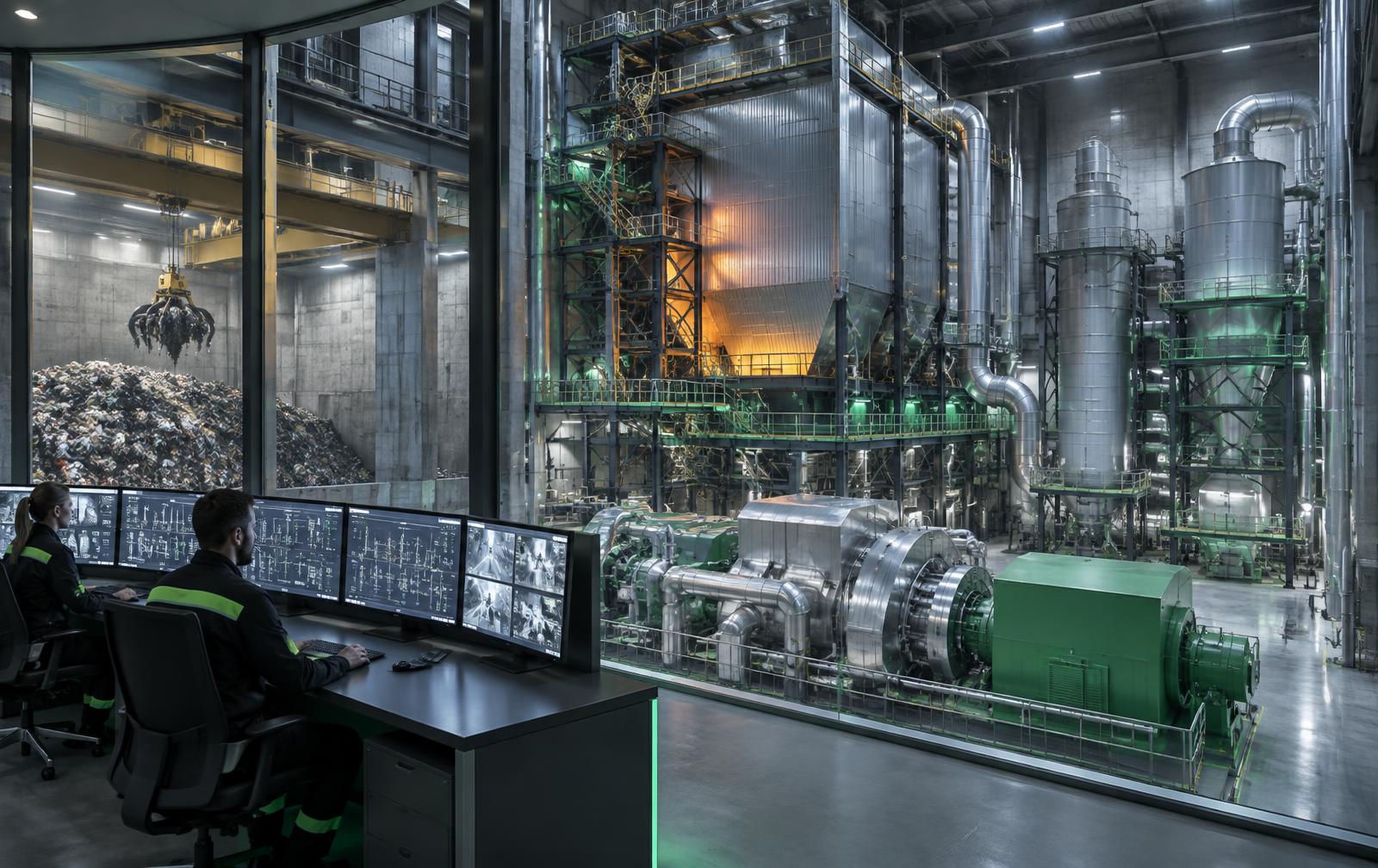
TRS combines specialist technologies, machines and process steps into an integrated plant concept for the residual fraction.
The complete system
The system starts with characterisation. It does not assume every tonne belongs in a furnace.
Waste characterisation
Realistic prevention, reuse and recycling interface
Biological treatment of suitable organic streams
Residual-waste preparation
Controlled thermal energy recovery
Flue-gas treatment and continuous monitoring
Bottom-ash conditioning
Ferrous and non-ferrous recovery
Fine metal recovery
Mineral upgrading and qualified applications
Minimal final disposal
Modern Waste-to-Energy is not emission-free.
Its role is controlled energy recovery from suitable non-recyclable residual waste, with Best Available Techniques, emissions control and transparent monitoring.
The back end of the plant
Energy recovery converts the residual fraction. What leaves the grate is still material: bottom ash containing ferrous, non-ferrous, fine non-ferrous and a large mineral fraction. That line is designed, not improvised.
Metals line
Ash conditioning, screening into defined size classes, magnetic separation, eddy-current separation, dedicated fine non-ferrous stages, heavy-concentrate handling, upgrading to a saleable grade.
Mineral line
Sampling, treatment and ageing, technical performance testing, environmental qualification, and identification of a locally approved application before any reuse route is claimed.
Recovery rates, grades and reuse routes are plant-specific. They follow from representative sampling and testing on the actual material, not from a reference plant elsewhere.
Our technical view
Editorial interpretation by TRS BV and Overdie. It is deliberately separated from verified facts and sourced project data.
TRS + Overdie
TRS BV
TRS BV is a Netherlands-based system design and integration company for recycling and Waste-to-Energy infrastructure, combining specialist equipment and process technologies into integrated plant concepts. Scope is confirmed project by project.
Overdie
Overdie is a Netherlands-based circular metals, secondary raw materials and industrial logistics company active in ferrous and non-ferrous metals, material recovery, processing and industrial logistics.
Maximum value from every tonne.
International experience + strong local execution
The objective is to combine international experience with strong local execution — not to treat one geography or supply base as inherently superior.
Project development
Discuss a project with TRS & Overdie.
Discuss a project with TRS & Overdie