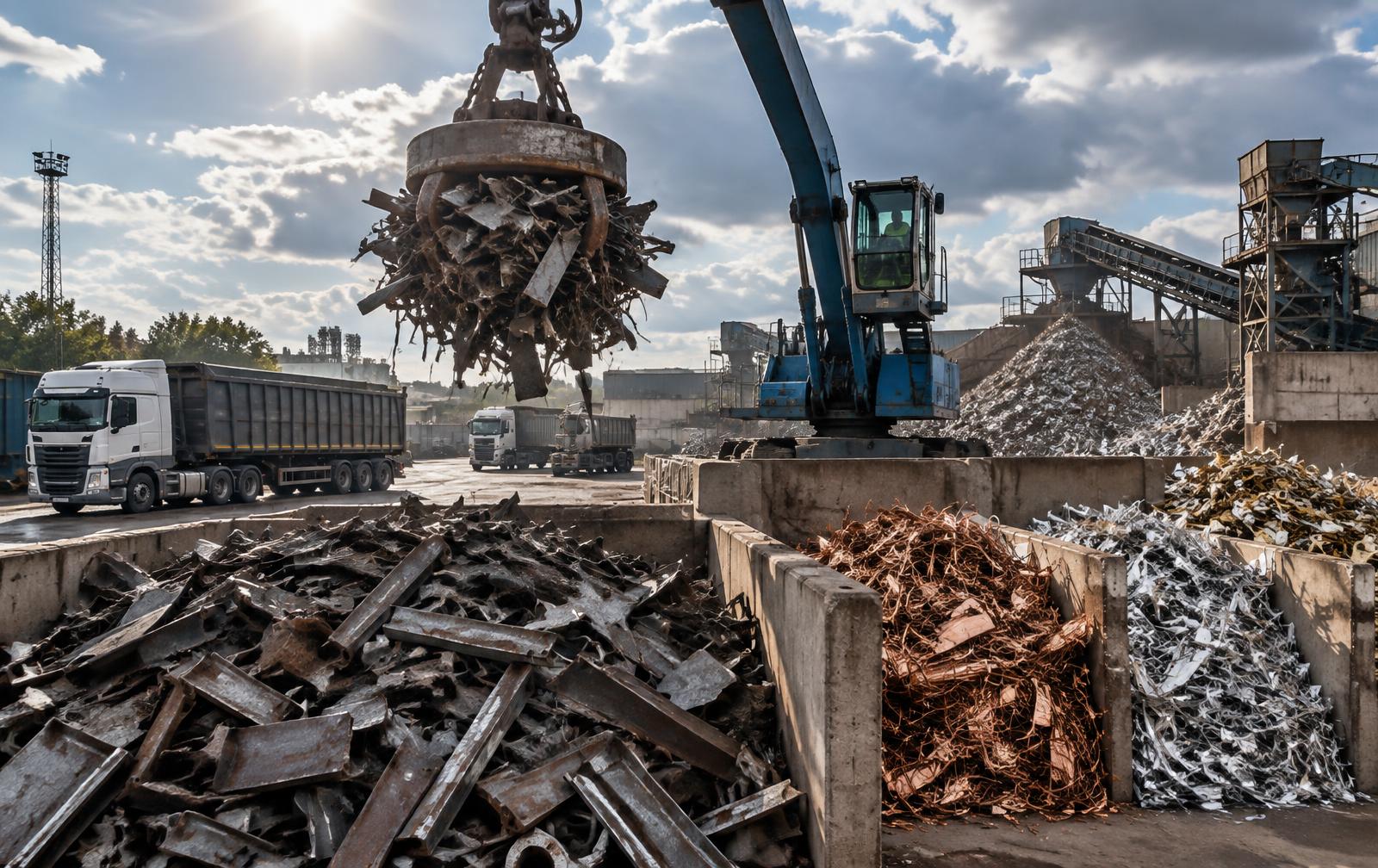

Recovered ferrous and non-ferrous metals at an industrial processing facility
Waste to Value Global — powered by TRS and OverdieFirst activation scrolls to the top of this page. Second activation opens the home page.
Resource recovery

From bottom ash to marketable raw materials

Recover the metals.
Upgrade the minerals.
Reduce final disposal.
Create a market for what remains.

The furnace is not the end of the process.

Three concrete services

Ash scan. Metal recovery. Mineral route.

Start with the ash you already produce, then decide where metals and minerals can create value.

01 — Ash scan

What value is still inside your bottom ash?

A structured assessment of the incinerator bottom ash (IBA) your plant already produces, before any investment decision is taken.

  1. 01Representative sampling
  2. 02Material analysis
  3. 03Particle size distribution
  4. 04Ferrous content
  5. 05Non-ferrous content
  6. 06Fine non-ferrous potential
  7. 07Mineral composition
  8. 08Indicative recovery opportunity

Outputs

  • Material characterisation
  • Indicative mass balance
  • Metal recovery potential
  • Mineral recovery potential
  • Identified losses
  • Recommended next-stage test programme

No guaranteed recovery percentage is stated before plant-specific testing.

Assess my bottom ash

02 — Metal recovery

Recover more value from the metals.

Overdie evaluates recovery, upgrading, logistics and potential offtake routes for recovered metal concentrates.

  1. 01Recover
  2. 02Separate
  3. 03Upgrade
  4. 04Analyse
  5. 05Market / Offtake

Material streams

  • Ferrous metals
  • Aluminium
  • Copper
  • Brass
  • Zinc
  • Stainless steel
  • Heavy non-ferrous concentrates
  • Fine non-ferrous fractions

Subject to material specification and commercial evaluation.

Discuss a metal stream

03 — Mineral route

What happens to the other 90%+?

After metal recovery, the majority of incinerator bottom ash is a mineral fraction. The objective is to determine whether this material can be treated, tested, qualified and used as a secondary raw material.

  1. 01Sample
  2. 02Treat
  3. 03Test
  4. 04Qualify
  5. 05Identify local application
  6. 06Develop offtake route

Potential routes

  • Secondary aggregates
  • Road construction applications
  • Bound construction products
  • Cement / mineral applications
  • Engineered fill
  • Other locally approved applications

Actual reuse depends on material quality, treatment, environmental testing, technical standards and local regulation.

Explore a mineral route

Where do you start?

Two entry points into the same system.

I operate a WtE plant

  • What happens to your bottom ash today?
  • How much metal is currently recovered?
  • Are fine non-ferrous metals still being lost?
  • What happens to your mineral fraction?
  • Can final disposal be reduced further?
Assess my existing plant

I am developing a new WtE project

  • Is resource recovery included in the original design?
  • Is bottom ash processing specified before tender?
  • Are ferrous, non-ferrous and fine metal recovery included?
  • Is mineral utilisation being considered?
  • Are local material markets already identified?
Design resource recovery from day one

Two equal pillars

Metals recovery and mineral recovery.

Exact composition varies strongly by waste stream, combustion system, ageing and recovery technology. Neither pillar is an afterthought.

Metals recovery

Ferrous
Aluminium
Copper
Brass
Zinc
Stainless steel
Heavy non-ferrous concentrates
Fine non-ferrous fractions

Mineral recovery

Secondary aggregates
Construction applications
Road applications
Cement / mineral routes
Bound construction products
Other locally approved products

Actual reuse depends on material quality, treatment, environmental testing, technical standards and local regulation.

After energy

A deliberate recovery chain.

01

Bottom Ash

02

Maturation / conditioning where required

03

Screening

04

Ferrous recovery

05

Non-ferrous recovery

06

Fine non-ferrous recovery

07

Mineral upgrading

08

Secondary raw materials

Offtake

Recovery only creates value when there is a market.

Local where possible.
International where it adds value.

International shipment is not promised for every material. Logistics, economics and regulation are assessed per project and per material specification.

Material evaluation
Quality upgrading
Metal grading
Logistics
Market access
Offtake development
TRS + Overdie interpretation — not a government statement

Our technical view

How we read this market.

Editorial interpretation by TRS BV and Overdie. It is deliberately separated from verified facts and sourced project data.

Bottom ash treatment should be designed into a project from day one. Retrofitting recovery after commissioning is technically possible, but the plant layout, space and contracts rarely make it easy.
The fine fraction is where most value is typically lost. What happens below 4 mm is often unclear, and in many plants it has never been measured.
A mineral route only exists when a local application and a local permit exist. Technology alone does not create an outlet.
The earliest useful intervention point in a new project is before tender: once the EPC scope is fixed, bottom ash is usually treated as a disposal line item instead of a material stream.

Open items

Questions still to verify

These questions are open per plant and per project. They are answered with the owner or operator, not assumed.

Who owns the bottom ash?
Who owns the recovered metals?
Which processing technology is installed?
Which particle sizes are currently recovered?
What happens below 4 mm?
Where does the mineral fraction go?
What are the current disposal costs?
Is ash treatment included in the EPC scope?
Are offtake agreements already in place?
Which local mineral applications are permitted?

Project development

Maximum value from every tonne.

Energy, metals and qualified mineral routes belong in one integrated project concept.

Discuss a project with TRS & Overdie